



- 28 Sept 2022
- 0 Comments
- 6 Mins Read

Learning German in Basel: Immersion for greater success
Switzerland is a country of immigration. Almost every fourth inhabitant in this country was born abroad and every third has a migration background. On the other hand, we know that up to 200,000 people immigrate from abroad every year. This means that learning German is extremely important.
The situation is no different in Basel. In this canton, the proportion of foreign nationals currently stands at 36.9%. The proportion of the permanent resident population with a migrant background is, of course, much higher. According to statistics from 2020, 52.2% of the population in this canton have a migrant background.
Learning German in Basel is therefore a major challenge for many. Good knowledge of German is a key to integration, and this does not only affect people from abroad or with a migration background. Swiss people whose native language is French or Italian also need this key in German-speaking cantons.
Of course, it is not easy to learn a completely different language. Learning a foreign language is a major challenge, especially for adults. The bureaucratic hurdles after immigration and other cultural conditions and customs that prevail in Switzerland make learning German even more difficult.
Since the outbreak of the pandemic, we have also had to reduce our contact with other people to a minimum, and this has particularly disadvantaged people who need to learn German. Furthermore, our limited opportunities for contact had to be accompanied by face masks for months. Participants in German courses in Basel, like elsewhere, had to switch to online German courses.
At SLA Basel are we currently also relying on Online German courses in Basel and Olten and do our best with our competent German teachers. We know that language acquisition through immersion has become very important and ensure that our course participants are completely immersed in the German language.
Our German teachers for our Intensive German courses, German Super-Intensive Courses, German semi-intensive courses, German evening classes in Basel, German certificate courses in Basel and our German private lessons in Basel place great value on you truly immersing yourself in the German language and know that grammar rules alone cannot guarantee us anything.
Anyone who learns a language using this method has the opportunity to listen to German speakers as much as possible, learning everyday speech and expressions that you will not learn in grammar books. Thanks to this method, course participants can pick up idioms and colloquial phrases that give the language character and interest.
How much time should I spend on the immersion?
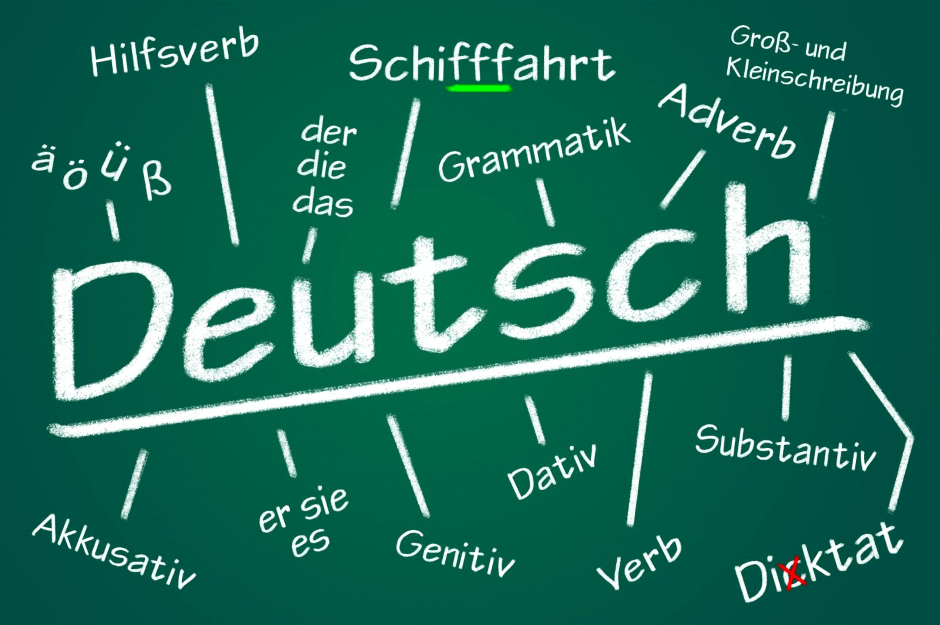 Immersing yourself in a language can be an absolute pleasure. How you start depends on your current level, but you need to start small and build up your immersion time to form a habit.
Look for opportunities to immerse yourself in the German language during the day. This can be during your morning commute, on the way to school, or while waiting in a queue.
You can even replace your entertainment time with German.
Even if you are a relative beginner, there are TV shows and books that are ideal for immersion, and if you are at B1 or B2 level and above, there are countless hours of television programmes and endless books that you can enjoy.
Getting started with learning German in Basel
Let us break down our immersion strategy into the four pillars of language learning: reading, writing, listening and speaking. For all-round benefits, you must dedicate time to each pillar.
Read and learn German
 Reading for pleasure, rather than reading in the form of a grammar book, can be very beneficial for improving language learning. This way, you will absorb words, phrases and grammar naturally without really noticing it. Anyone who encounters the same words and phrases many times and in different contexts while reading learns better. This also motivates you to learn new words that appear while reading.
Reading works well because it functions effectively as a spaced repetition system. You will come across a new word or phrase, and a few chapters later it might appear again. Your brain is reminded of the word before it has a chance to forget it.
The best thing about this immersion is that it's so easy to integrate into your day. Just keep your book or magazine in your bag and start reading whenever the opportunity arises. It is especially nice to do this during your lunch break or when commuting by train or bus, instead of just mindlessly scrolling through social media.
Writing and learning German
Writing in German helps you to process what you have read and heard and to understand how German sentence structure and grammar work. It will improve your speaking skills because writing gives you time to process a sentence and check whether it is correct. Once you have already “rehearsed” a sentence by writing it down, it will be easier for you to get it right when you speak it.
The best way to immerse yourself in written German is to start a diary. Depending on your level, you can simply start by writing about what you did that day. At the beginning, try to write a few sentences every day.
Since not all of us lead exciting lives all the time, you can start writing a book in German. You can simply write whatever your imagination and writing skills allow. It is also very practical to keep shopping lists or to-do lists in German. This way, you can successfully incorporate many everyday words and phrases into your vocabulary.
Listen, watch and learn German
If you spend time listening to natural German dialogues in a TV show or film, you will hear German as it is actually spoken in real life. This means you will be able to pick up idioms, slang and all kinds of everyday language that you will not find in grammar books.
And there is so much to choose from. This includes, for example, the countless YouTube channels in German. With most TV programmes, you can turn on German subtitles. So if the show you are watching is a bit difficult to understand, you should have the subtitles in German to follow the story.
If you travel a lot, or have a long journey by train or bus, you can use this time to immerse yourself even more in German. You can also download some of the many free podcasts for German learners. Like books, there are podcasts aimed at German learners at all levels.
Speak and learn German
Thanks to the internet, we can now communicate relatively easily with anyone in the world. There are several language exchange apps where you can find a language partner. On top of that, there are endless things to talk about: language goals, hobbies, your plans, etc.
Do you have any questions about learning German in Basel? As SLA Basel we are at your disposal with our German courses taught by professional German teachers. Our partners include Tutor Academy, Kulturlegi, Eduqua, temptraining and SVEB FSEA. With us you can learn German in a pleasant atmosphere.