


- 30 Jun, 2025
- 0 Comments
- 4 Mins Read

Spanish at C1 level: How to achieve linguistic precision
Spanish at C1 level: How to achieve linguistic precision
You speak fluent Spanish, are able to understand complex texts and communicate in almost any situation, but you notice that that certain something is still missing. This is actually where C1-level Spanish begins. At this advanced stage, it is about communicating precisely, with nuance and effectively.
Anyone who speaks Spanish at C1 level naturally wants more. Not just to be understood, but to be heard and taken seriously. Whether in your studies, career, or in demanding conversations. Here you will find out how to refine your expression, avoid typical C1 pitfalls, and achieve linguistic confidence through targeted methods.
Why precision at C1 level is crucial
On B2 level it is often enough for learners simply to make their thoughts somehow understandable. At C1 level, it is much more about fine-tuning. Which nuance do you want to express? How does your choice of words influence the effect on the other person? Precision is shown in the correct tense, the suitable adjective, the right mood. It determines whether you are perceived by your conversation partner as convincing, competent, or uncertain.
What does C1 actually mean?
The C1 level in the Common European Framework of Reference for Languages (CEFR) stands for advanced language use. Anyone at this level can express themselves fluently, spontaneously, and with nuance – both in speech and in writing. This is no longer just about correctness, but about style, nuance, and impact. In short: C1 means not just „being able to speak“, but „communicating precisely“.
Common blurs and how to avoid them
Even advanced learners fall into typical C1 traps. Let's take a closer look at these:
- Inaccurate verbs: e.g. do instead of carry out, have instead of own.
- Incorrect register: Colloquial language in formal texts.
- Generalisations: e.g. everybody says that… instead of according to some studies…
Tip: Work regularly with Vocabulary lists by subject area. Learn Context examples instead of isolated vocabulary.
Impactful Vocabulary: How to phrase things more effectively
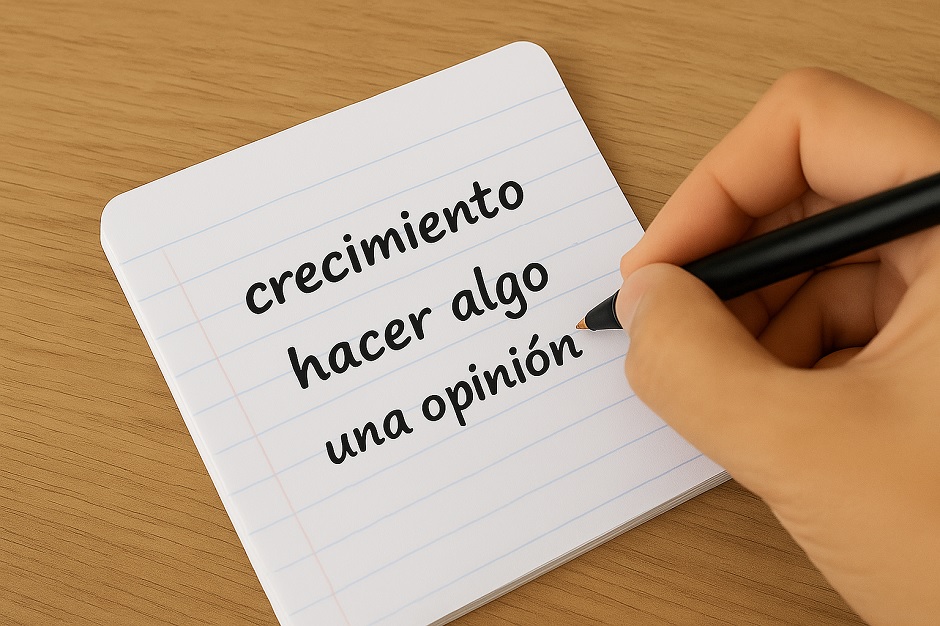
At C1 level in Spanish, it is no longer just a question of knowing the word. Rather, it is important that it fits precisely. Anyone talking about politics, culture or the economy needs a differentiated vocabulary:
- moderate growth instead of just growth
- take concrete steps instead of do something
- a nuanced position instead of an opinion
Therefore, regularly practise Spanish at C1 level with newspaper articles, podcasts or debates. This way, you can see language use in real contexts.
C1 Grammar: Not just correct, but targeted
You already master the tenses? Good. At C1 level, however, it goes even further. Pay attention to the following important points:
- Using the subjunctive purposefully (e.g. even if it's difficult…)
- passive constructions to express objectivity
- Nominal style and relative clauses to make texts denser and more structured
- reported speech with backshift, which is a frequent examination topic
Grammar at C1 level in Spanish means: using it consciously to create effect, style and clarity.
Read text, understand precision
Reading is the key to linguistic intuition. Therefore, reach for editorials, feature articles or essays. Pay particular attention to the answers to the following questions:
- How are arguments constructed?
- What phrases are used?
- What sentence structures dominate?
Therefore, highlight strong phrasing and try to incorporate it into your own texts or discussions. This is how your repertoire for Spanish at C1 level actively grows.
Speaking at C1: Precise and spontaneous at the same time
At C1 Spanish level, it mainly means: You can express yourself fluently without hesitating, whilst also being clear and structured in terms of content. Therefore, the following points are helpful:
- structural words (therefore, despite that, nevertheless)
- Hedging strategies (in my view, it could be said that…)
- Discussion techniques, e.g.,. I agree up to a point…
Train for this language level with tandem partners, discussions or speaking cards. Get targeted feedback on your choice of words and impact.
Practice makes perfect: how to train with a specific focus
For more precision you mainly need targeted practice. Here you can find some effective methods:
- Shadowing with podcasts: speaking aloud, imitating, analysing
- Writing exercises with feedback (e.g. essays, comments, summaries)
- Useful phrases training with flashcards or apps
- Simulate speaking situations (e.g. examination interviews, discussion rounds)
Therefore, record yourself, compare yourself with role models and improve in a targeted manner.
Learning Spanish in Basel
If you want to learn Spanish in Basel and need a language course for C1 level Spanish, at the language school you have SLA Basel different possibilities by experienced Spanish teachers. With a suitable Spanish in Basel can you also prepare for the C1 exam? Our partners include KulturLegi, Eduqua, temptraining and Tutor Academy.
From good language to effective communication
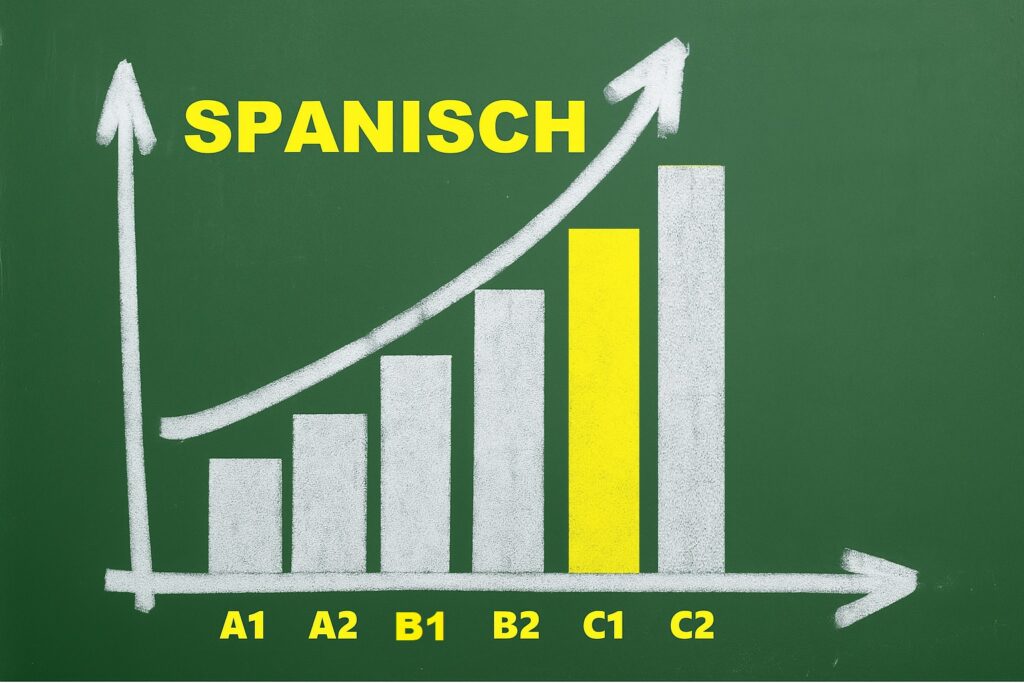
Spanish at C1 level is more than just language proficiency. Rather, it is linguistic mastery. Those who can express themselves precisely, with nuance and style in Spanish are not merely communicating. They are persuading. With the right strategy, regular practice and a genuine interest in language, making the step from „good Spanish“ to excellent expression is achievable.