


- 28 Oct 2021
- 0 Comments
- 3 Mins Read

Early foreign language education brings significant benefits
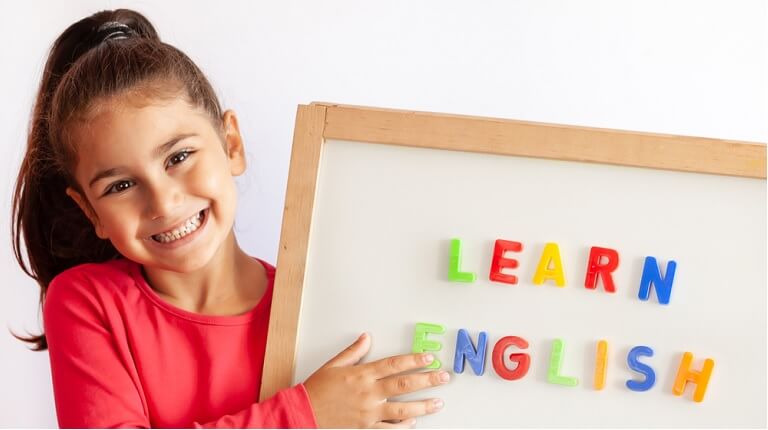
Lately, it is on everyone's lips how important it is for children to learn foreign languages at an early age. In order to begin language lessons at a young age, some families send their children to nursery schools that offer foreign language teaching, while others look for language schools for children for early foreign language education.
So is it really an advantage to start learning foreign languages at a young age? Do children who learn a foreign language have an advantage over children who only learn a foreign language at school? The answer is always yes. There are many other valid reasons to introduce your child to at least one foreign language at an early age.
Early foreign language education makes your child more intelligent

Many recent studies show that people who speak at least one foreign language are better than monolinguals in situations that require multiple skills, attention and concentration. According to experts, this is because the brain's multitasking ability increases when it learns to switch from one language to another.
People with this mental ability show better adaptation to their environment and cope better with challenges. Multilingual people are more successful and learn faster than their monolingual peers, particularly in the areas of vocabulary, correct reading comprehension and mathematics.
Similarly, multilingual individuals show a more consistent personality by behaving more rationally in social spheres and making better decisions. These skills through foreign language education are evident in children from a young age. In fact, studies show that babies who grow up listening to two or more languages and benefit from early foreign language education exhibit a different cognitive thinking model from the age of one.
Early foreign language learning promotes the acquisition of the mother tongue

In the past, it was believed that foreign language instruction in early years would confuse children and weaken their skills in their own language. Today, we think the opposite.
Many studies show that a child who learns a foreign language develops their speaking ability in their own language, learns to read and write more quickly, and that this ability increases as they get older.
It is easier to learn foreign languages in early childhood

We know that children learn their parents' language by soaking it up like a sponge. Today, we know that this knowledge also applies to early childhood foreign language learning.
This unique capability through foreign language education makes learning a foreign language easier for a child from birth to the age of 5 to 6 years. The younger the child is, the easier it is to learn a foreign language without an accent and like a native language, and the older the child gets, the more difficult language learning becomes.
Foreign language education boosts your child's creativity

According to linguists, the more languages a person speaks, the more flexible and creative they are. This is because learning a foreign language enables children to develop important skills such as problem-solving and rational thinking at an earlier age. New words, new language skills and the cultural wealth of another country that comes with them change one’s perspective on the world, concepts and problems.
Multilingual people have a higher capacity for empathy
Similarly, studies show that people who speak foreign languages are more successful at putting themselves in other people's shoes and understanding the feelings and needs of others. This is particularly evident in children who started learning a foreign language at an early age. This is because the experiences and interactions involved in learning a new language provide the child with completely different experiences and intuitions compared to peers who speak only one language.
Multilingual people manage their careers more effectively
Mastering different languages is one of the most important skills in the world of the future. Language skills open up various career opportunities, make it easier to secure a job, and even enable applications for and acceptance into international positions. Particularly in certain roles, good foreign language skills ensure a higher salary. Foreign language education plays an important role here.
Even during school years, multilingualism can be promoted through language courses for children in Basel. At SLA Basel you will find English courses for children in Basel, German courses for children in Basel or French courses for children in Basel.