

- 26 May 2026
- 0 Comments
- 4 Mins Read

Is code-switching a sign of competence?
What does language mixing mean?
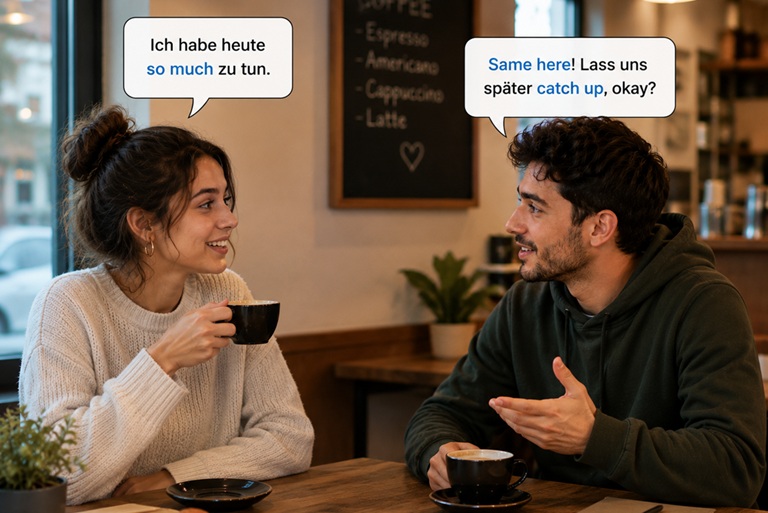
Under Code-mixing we understand the mixing of different languages within a conversation or even within a single sentence. Many people experience this in everyday life: part of the sentence is spoken in German, while individual words come from Turkish, English or another language.
Especially in multilingual families or communities, this often goes almost unnoticed because everyone involved has similar speech habits. This quickly creates the impression that this way of speaking is completely unproblematic. In fact, it can seem practical in the short term because missing words are spontaneously replaced by terms from another language.
In the long term, however, precisely this habit can entail significant disadvantages. Anyone who constantly speaks a mixture and does not consciously separate their languages often fails to develop a truly confident and precise expression in either language. The consequences frequently only become apparent later. Especially at school, in the workplace, with public authorities, during medical consultations or in social situations outside one's own environment.
Why people mix multiple languages
People mix languages for various reasons. Some grow up multilingual and switch automatically between different linguistic environments. Others move daily between family, work, social media and circles of friends, where different language habits dominate everywhere.
Often begins Code-mixing out of convenience. If a word in one language doesn't come to mind, a word from another language is quickly used. In familiar groups, that usually works without any problems because everyone involved understands the context.
However, that is precisely where the danger lies. Anyone who constantly relies on this workaround does not sufficiently practise expressing thoughts fully and correctly in a language. The missing words are not actively learned, but permanently bypassed. Over time, this creates significant gaps in language skills.
Code-switching in children
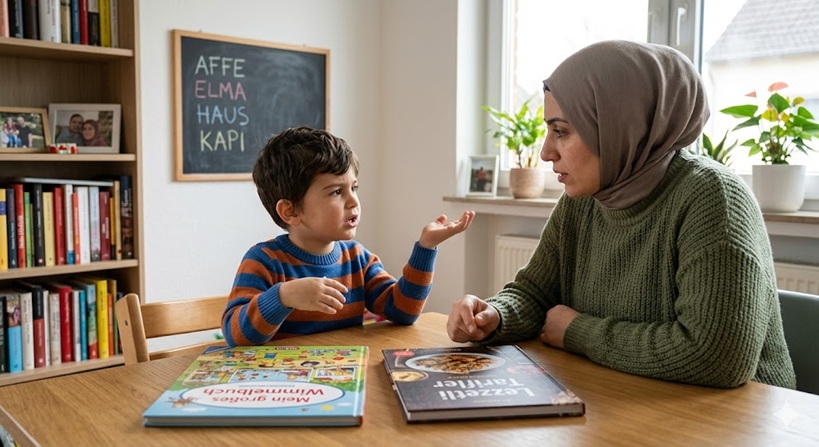
In multilingual children, code-switching is often seen as completely normal. However, this behaviour should neither be romanticised nor automatically understood as a sign of special talent. Otherwise, there is a risk that the valuable asset of bilingualism will ultimately turn into a painful loss in both languages.
If a child regularly replaces words, cannot formulate sentences properly to the end or constantly switches between languages, this can also indicate that the vocabulary has not been built up stably enough in one or more languages.
Parents and caregivers often underestimate how important clear linguistic structures are. Children need complete sentences, active conversations, corrections without pressure and enough linguistic input in every single language. If everything is mixed together permanently, the basis for confident expression is often lacking.
Later on, this is often shown by the fact that although children understand a lot, they cannot formulate their thoughts clearly. Particularly complex subjects, feelings or explanations then cause difficulties.
Code-mixing in adults
Even adults often get used to mixed speaking, especially if they live predominantly within their own community. There, the insecurity is hardly noticeable because similar speech patterns are used by many people.
Outside this familiar environment, however, problems often arise. In formal situations, it is not enough to be „more or less understood“. In such contexts, clear phrasing, precise terminology and linguistic confidence are essential.
For example, if someone cannot explain their symptoms precisely to a doctor, constantly searches for words during a job interview, or communicates only in fragments with authorities, they quickly appear unconfident or overwhelmed. This does not relate to the person's intelligence, but rather to their ability to express themselves verbally.
That is precisely why one should consider the long-term consequences of Code-mixing take it seriously and not just focus on short-term relief.
Multilingualism does not automatically imply language proficiency
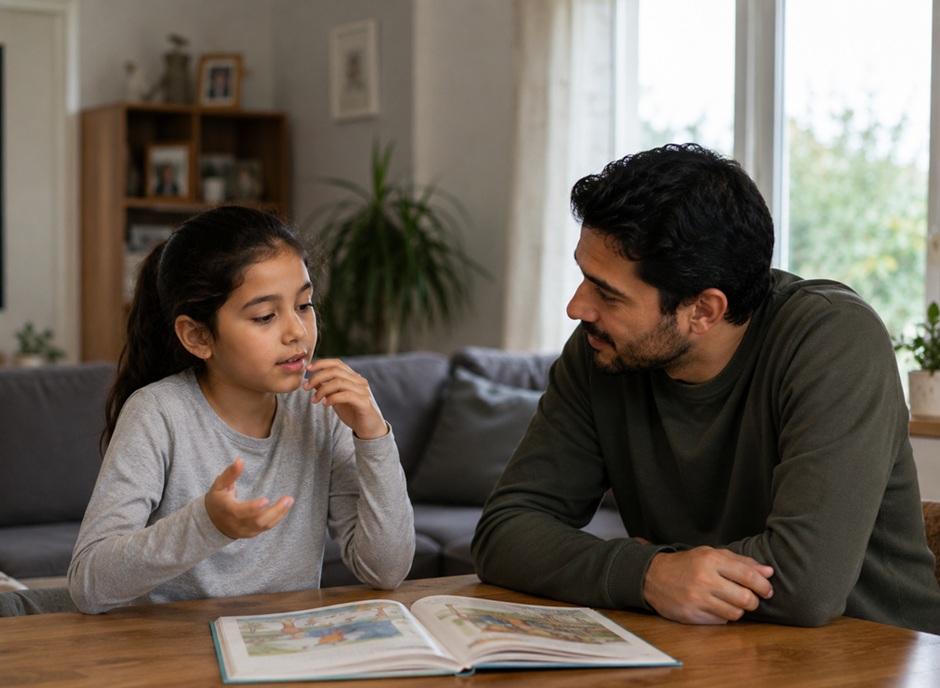
Many people automatically equate multilingualism with a high level of language proficiency. However, that is not always correct.
There is a big difference between someone who truly commands two languages fluently and someone who constantly has to switch between languages because they lack important words or structures in both.
True linguistic competence means being able to express thoughts clearly, completely, and appropriately for the situation, both in writing and speech. Anyone who can only communicate by constantly switching often does not possess this certainty fully.
That is why Code-mixing not automatically be portrayed as a strength. It can also be an indication that foundational language skills are lacking.
The social consequences in everyday life
The effects often only become apparent in adulthood. Many of those affected feel linguistically insecure when outside their familiar surroundings. They avoid lengthy conversations, withdraw or are afraid of making mistakes.
Others come across as uneducated or helpless, even though they are in fact intelligent and experienced. The problem, then, lies not in their thinking, but in their verbal expression.
This has a particularly severe impact on people whose jobs rely on communication. Those who are unable to express themselves clearly often find themselves at a disadvantage when it comes to job applications, meetings with clients, exams or further training.
Insecure multilingualism is not heritable
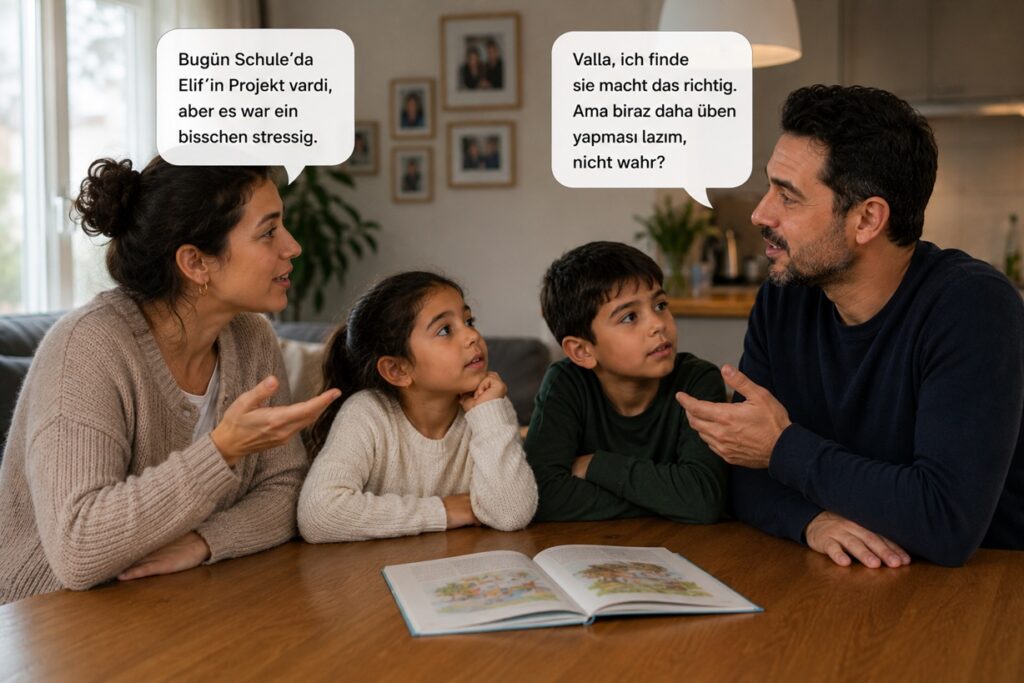
Later, many of these people are also unable to reliably pass on multilingualism to their own offspring. After all, anyone who does not truly master any language with stability can only offer children limited linguistic role models.
As a result, multilingualism is not passed on as a strength, but is often merely passed on as an inconsistent mix of languages. It is primarily for this reason that this so-called ‘code-switching’ should be viewed realistically. This means taking action and turning a loss into a gain.
The role language courses play
Good Courses help to build precisely this stability. They expand vocabulary, improve sentence structure and help students to deal confidently with everyday situations.
Practical exercises are particularly important: conversations with the doctor, telephone calls, job interviews, discussions or written texts. This helps people to express themselves clearly without constantly resorting to evasive language. A good Language course in Basel should therefore not only teach grammar, but also build genuine confidence in communication. With a Placement test one can determine what language level one is at and which course best suits one's needs.